Florian Rolke × Matt Knights · Cycle 001 · July 23, 2026

The Knights Content Engine.
Not proposed. Running.

You gave me 37 minutes of your voice on our July 8 call, and then you went out of town. So I did what the system we scoped is designed to do: I ran it. Everything below was produced by the engine from that one conversation — and it cost you exactly zero minutes of extra work.

INPUT: one 37-minute call · YOUR EFFORT SINCE: 0 minutes · STATUS: live

5
Research passes
55
Real questions mined
7
Competitors analyzed
22
Blog pages live
8+8
LinkedIn + X posts
8
AI creatives

01 · The Input

37 minutes of you, talking.

This is the entire fuel source for everything on this page. No forms, no homework, no "send me your brand guidelines." Just the conversation we already had — the same kind of talking you do in the truck every day.

"We have, in my territory, 13% of all data centers in the world. If you count just North America, it's 32%."
Matt · 20:00 — became the white paper's spine
"You should consider using a macro fiber instead of this or that... as long as I'm not making opinionated statements about it."
Matt · 22:20 — became the guardrail system
"It's like one equals none, two equals one type thing."
Matt · 5:09 — became the voice profile
"I might get a day or two that I can start doing something and then it just derails, basically."
Matt · 27:49 — the problem this engine exists to end

02 · The Engine

What happened to those 37 minutes.

Seven stages, fully automated orchestration, human judgment where it counts. This exact pipeline runs every cycle — later fueled by your drive-time voice notes instead of our call.

Stage 1 · Ingest

Transcript → Knowledge Bank

Every fact, story, boundary, and turn of phrase you used, extracted and indexed.

→ 25 voice fragments · 15 ready-to-write angles · your exact conflict-of-interest boundaries
Stage 2 · Research

Demand + Landscape Sweep

What real people ask Google about concrete, who currently owns each conversation, and a 7-domain competitor teardown — the same deep-research process behind the mitigation and eCommerce blogs I showed you. Finding: not one competitor ships FAQ schema or question-form headings. Your structure is the moat.

→ 55 People-Also-Ask questions · 131 related searches · thought-leader teardown · 7-domain competitor analysis
Stage 3 · Position

Niche Intelligence Map

Where the demand, the trends, and your unfair advantages overlap — and the five gaps nobody occupies.

→ excerpt below
Stage 4 · Voice

Tone-of-Voice Profile + Guardrails

How you actually sound — from your call, your LinkedIn About, and your real past posts — with your employment-safety rules written as hard law.

→ excerpt below
Stage 5 · Produce

White Paper + Blog

A 2,200-word flagship white paper plus 14 supporting articles across four pillars, published on your own site with full technical SEO/AEO: answer-first structure, FAQ schema on every page, sitemap, AI-crawler manifest.

→ 22 pages live at matt-knights-blog.pages.dev
Stage 6 · Repurpose

The Bite-Sized Pieces

The content chopped into eight LinkedIn posts with eight different jobs — story, utility, conversation, market analysis, honest math, referee, series launch, identity — each with an X variant. Five carry ad-style creatives with the headline baked into the image.

→ 8 LinkedIn posts · 8 X posts · 8 AI visuals (5 in the ad style below)
Stage 7 · Distribute

The Rails

Publishing runs through LinkedIn's official API — the same production system that already posts to my feed. Your account connects with one 2-minute authorization.

→ proof below, including the exact API payload for your first post

03 · Output — Deliverable #1

The Niche Intelligence Map.

niche-intelligence-map-2026-07.md · excerpt

The one-line position

"I stand on the data-center pours that power the internet — and I translate the sustainability specs everyone's arguing about into plain English for the people who actually place the concrete."

The five ownable gaps

  • The concrete voice of the data-center boom. Analysts cover megawatts and land; sustainability voices are corporate or academic. The intersection is empty — and it's your backyard.
  • The spec-to-slab translator. Buy Clean, EPDs, GWP limits are regulatory PDFs and vendor decks today. No trusted human bridges spec to jobsite.
  • The honest referee of the Type IL / SCM fight. Your no-brand-opinions rule makes you credibly neutral by design. The constraint IS the brand.
  • The territory manager's field notebook. 60,000 miles a year between plants and jobsites. Impossible to fake.
  • AI-meets-concrete from a practitioner. You sit on an AI council and actually deploy this. Most coverage is vendor hype.

Plus: the demand data (which questions people actually search), the competitive teardown (who owns each conversation and why you're different), and the full 4-pillar site architecture derived from it.

Full document delivered with the system. This excerpt is ~15% of it.

04 · Output — Deliverable #2

Your voice, written as rules.

Built from your call, your LinkedIn About, and your real past posts. Every piece of content the engine produces is checked against this — including an automated banned-word gate in the site build itself.

matt-knights-voice-profile.md · excerpt

How you sound (4 of 15 traits)

  • Systems-first framing. Your native instinct is systems, never products: "repetitive systems so that if there is a disruption, your one single system doesn't go down." Every piece opens with the system.
  • Hedge-then-land. "I wouldn't consider myself to be a prepper, but..." — you concede nuance first, then commit precisely. The writing does the same.
  • The worked example is your proof. "Let's just say you're dealing with cracking on your concrete slabs..." Every abstract point gets one jobsite-shaped example.
  • Usefulness over status, explicitly. "It's not about the status... am I making a difference... I'd rather be a go-to person." No bragging, no follower talk, ever.

The Conflict-of-Interest guardrails (hard law)

  • Never name or evaluate any admixture brand or product — anyone's.
  • Never speak for your employer. The blog carries a standing disclaimer on every page.
  • Educate in general terms, be specific about the problem — your own "consider X if you're dealing with Y" pattern.
  • Neutrality on contested topics is the brand. A post is never worth the paycheck that feeds six people.

Your fear became a feature: the guardrails are enforced in writing rules AND in an automated build gate.

05 · Output — Deliverable #6, early

Your blog. Live. Right now.

Same engine as the mitigation and eCommerce blogs — Markdown in, full site out: answer-first articles, FAQ schema on every page, sitemap, robots, an AI-crawler manifest (llms.txt), and a banned-word gate that failed zero times on this build.

Matt Knights   ·   Data Center Concrete · Sustainability · Admixtures 101 · Field Notes
The Concrete Behind the Cloud: What the Data-Center Boom Demands From the Mix
THE SHORT ANSWER — The data-center boom demands enormous, fast, high-performing concrete pours. The twist: the same owners driving that boom are now the biggest force pushing concrete toward lower carbon...

I spend most of my working life between concrete plants and jobsites in the DC, Baltimore, and Northern Virginia corridor. By the numbers I carry around, that corridor holds roughly 13% of the world's data centers...

  • The white paper — 2,200 words, your thesis, your numbers, your guardrails
  • 15 answer-first articles across all four pillars — EPDs, Buy Clean, low-carbon cost math, Type IL, hot/cold-weather concreting, cracking, the data-center market
  • Admixtures 101 — a full no-brands syllabus (the section only you can credibly write)
  • Rich pillar hubs — real pages, not link lists, each with its own FAQs
  • The moat, verified — a 7-domain competitor teardown found ZERO concrete sites shipping FAQ schema or question-form headings; every one of your 22 pages does
  • Full AEO stack — Article/FAQ/Person schema, sitemap, llms.txt
Open your blog →

06 · Output — Deliverable #4

One white paper → the bite-sized pieces.

Exactly the flow you described on the call. Three posts, three different jobs — and under each one, the reasoning, because you should always know why the engine chose what it chose.

MK
Matthew Knights
Helping Concrete Producers Improve Performance, Profitability & Sustainability
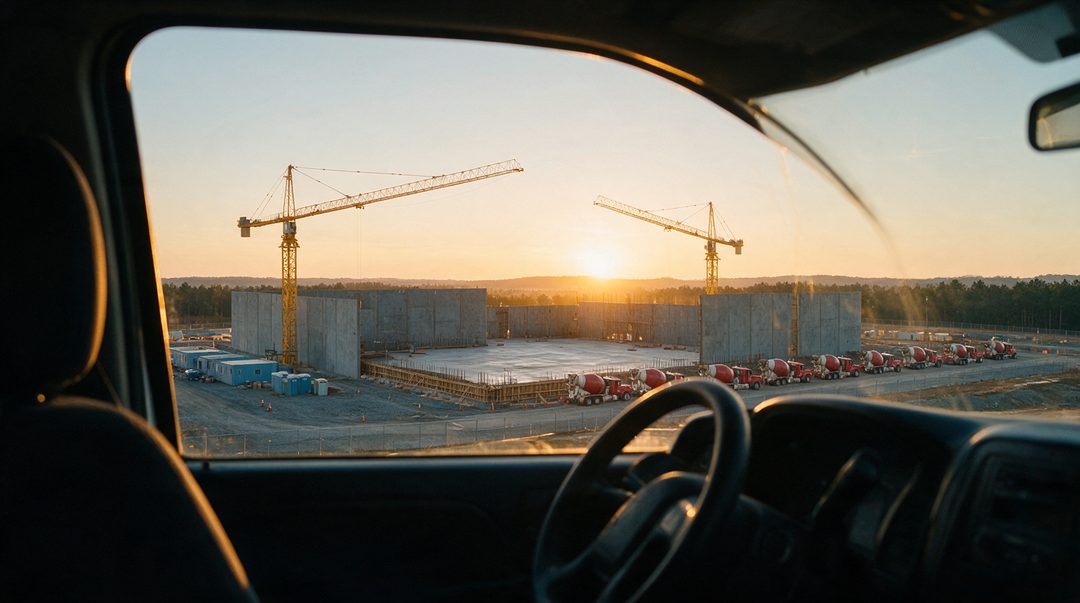
13% of the world's data centers sit in the corridor I drive every week. I put 60,000 miles a year on my truck between concrete plants and jobsites in the DC, Baltimore, and Northern Virginia area. Most coverage of the data-center boom talks about megawatts and land. From the seat of my truck, it looks like something else: concrete. Thick foundations. Tilt-up walls. Generator pads. Campuses that pour for months, sometimes years. But here's the part I didn't see coming...
Dawn view from a truck cab of a data-center construction site
👍 Like💬 Comment↗ Share
Post 1 · The Field Story — earns trust. Only someone actually in the truck can write it. Anchors the "concrete voice of the data-center boom" position and carries the article link.
MK
Matthew Knights
Helping Concrete Producers Improve Performance, Profitability & Sustainability
The EPD is quietly becoming bid paperwork. Not a poster in the lobby. A number your concrete has to hit to qualify. State GWP limits are in force on public work, and the biggest private buyers of concrete are screening for embodied carbon too. Here's the pattern I suggest, kept general on purpose: — If you're a producer near a data-center corridor: get your EPD situation sorted before a bid forces it...
Gloved hand holding an EPD document at a concrete pour
👍 Like💬 Comment↗ Share
Post 2 · The Checklist — earns saves and shares. Pure utility for producers, engineers, contractors. Save-rate reaches the right people, not a broad crowd — your metric, not vanity's.
MK
Matthew Knights
Helping Concrete Producers Improve Performance, Profitability & Sustainability
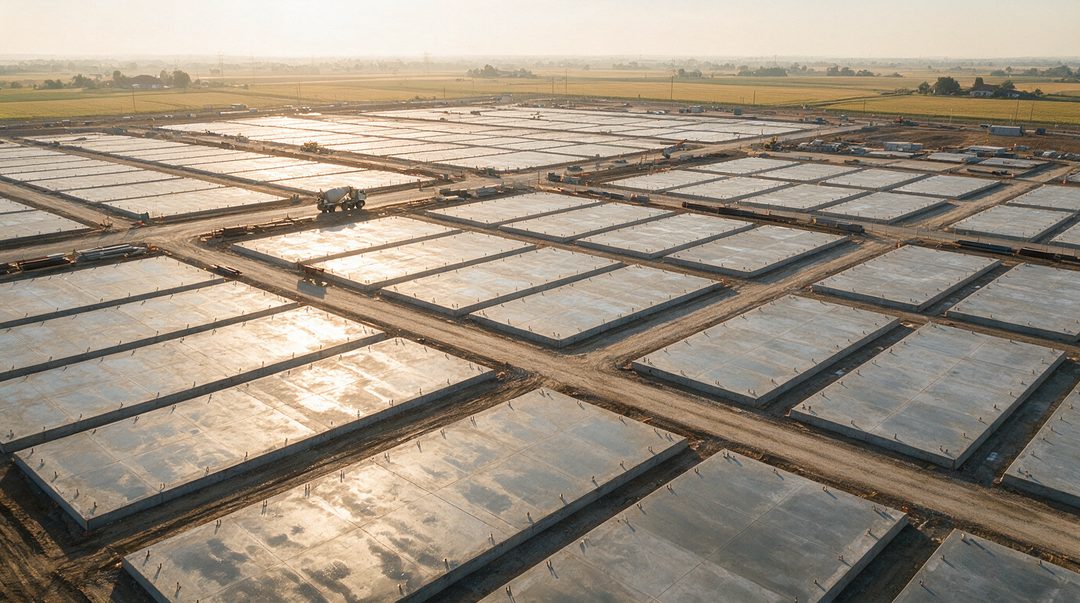
The biggest force pushing concrete toward lower carbon isn't a regulator. It's the customer. The largest, most sophisticated buyers of concrete right now are tech companies building data centers. Almost all of them have public climate targets. And they've started screening the concrete itself on embodied carbon. Rules move at the speed of legislatures. Customers move at the speed of the next bid...
Aerial view of a data-center campus of concrete foundation slabs
👍 Like💬 Comment↗ Share
Post 3 · The Observation — earns conversation. One sharp, honest claim that invites both agreement and pushback from the engineers and specifiers you want commenting.
MK
Matt Knights · X variant, same day as Post 3

The biggest force pushing concrete toward lower carbon isn't a regulator. It's the customer. Tech companies building data centers now screen bids on embodied carbon. Rules move at the speed of legislatures. Customers move at the speed of the next bid. Full writeup: matt-knights-blog.pages.dev/data-center-concrete/concrete-behind-the-cloud

06b · Cycle 002 — The Ad-Style Creatives

Headlines inside the image.

Five more posts, each with a creative built in the style that's converting for my other clients right now: the headline baked into the image, your positioning in seven words. Four use your real photo — that happens only with your OK, and every one regenerates as a scene version on request.

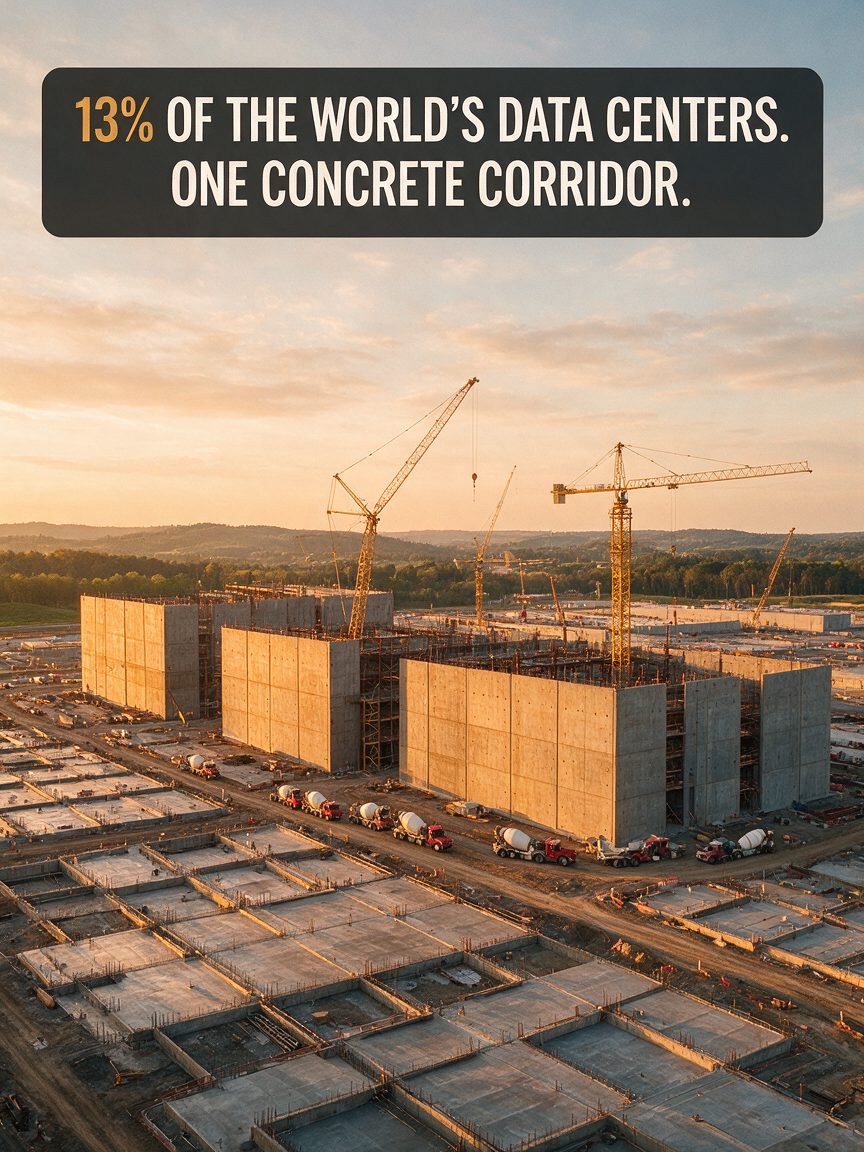
13% of the world's data centers — one concrete corridor
Post 4 · Scene style"Every producer in my corridor is in the data-center business. Including the ones who've never bid on one."
The EPD isn't green paperwork — it's your next bid
Post 5 · Your photo"The most expensive thing about low-carbon concrete is the bid you couldn't enter."
Type IL isn't the problem — surprise is
Post 6 · Your photo"Half the crews I meet blame the cement. The other half shrug. Both are reacting to the same thing: surprise."
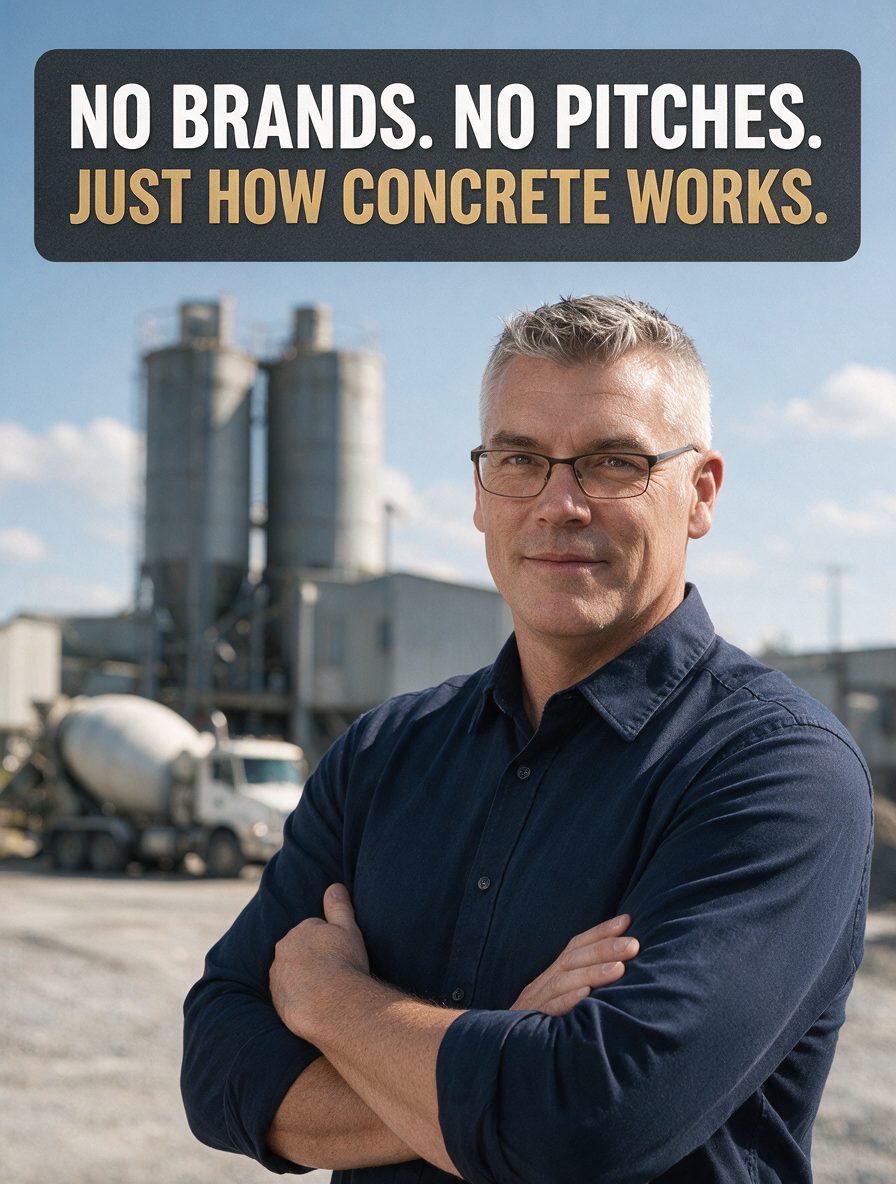
No brands, no pitches — just how concrete works
Post 7 · Your photo"I sell admixtures for a living. Which is exactly why this new series will never name one."
60,000 miles a year — every mile is research
Post 8 · Your photo"I spend 6 to 10 hours a day in a truck between plants and jobsites. That's not a commute. It's a research department."

07 · The Rails Are Real

Not a mockup. A production system.

Posting runs through LinkedIn's official API — no browser hacks, no third-party schedulers holding your login. Below: the actual API call, prepared from your first post, run through the same client that already publishes to my own feed.

▸ dry-run output · linkedin_native_client.py · your Post 1, ready to ship

{ "status": "dry-run", "author": "urn:li:person:CONNECTED_MEMBER_ID", // ← becomes YOUR id after a 2-minute authorization "would_send": { "commentary": "13% of the world's data centers sit in the corridor I drive every week.\n\nI put 60,000 miles a year on my truck between concrete plants and jobsites...", "visibility": "PUBLIC", "distribution": { "feedDistribution": "MAIN_FEED" }, "lifecycleState": "PUBLISHED" } }

▸ posts already published to my feed through this exact system

08 · What Unlocks at Kickoff

Cycle 001 is the foundation. The engine has more gears.

Everything above came from one call. The full system, per our scope, adds:

UNLOCK 01

Drive-time capture pipeline

Your Plaud pendant / phone memos flow straight into the knowledge bank. Your 6–10 hours of windshield time becomes the fuel line.

UNLOCK 02

Your LinkedIn, connected

One 2-minute authorization and the rails above publish as you — on schedule, while you drive.

UNLOCK 03

Drip publishing

The blog publishes twice a week on autopilot from the queue — the same cron system already running on my other client blogs.

UNLOCK 04

Programmatic video editing

Talk to your phone between jobsites; silences cut, music bed, intro trailer — shorts and long-form, no timeline work.

UNLOCK 05

X + wider distribution

Every cycle mirrors to X automatically; Instagram/YouTube when you're ready.

UNLOCK 06

Self-learning loop

Engagement data feeds back in: which formats the right people answer becomes the weighting for the next cycle.

UNLOCK 07

Email capture

The exit-intent system is already built into your blog template — we switch it on and start the list for your future teaching business.

UNLOCK 08

Lifetime updates

Every improvement I build into this engine — for myself or anyone — flows to you. Permanently. The system 18 months from now is better than today's.

09 · The Close

This cycle cost you zero minutes.
Imagine it running every week.

A year of trying to get this started, and the honest blocker was never knowledge or will — it was time and a system. The system now exists, with your name on it. What's left is dialing it into your standard: your voice notes in, your feedback on what comes out.

$2,400
once · 3-month build & dial-in
lifetime updates included
$1,200 + $1,200
split · second half at day 45
never triggers if you exit after month 1

The fair-exit guarantee stands: examine the foundation after month one — niche map, voice profile, published content. If you don't see it working, you exit, you keep everything built, and the second payment never happens.

Reply "let's go" →   Re-read the full proposal

P.S. — Everything on this page honors the rule we set on the call: no brand opinions, nothing on behalf of your employer, general education only. The guardrails aren't a promise in a document. They're already running in the code.